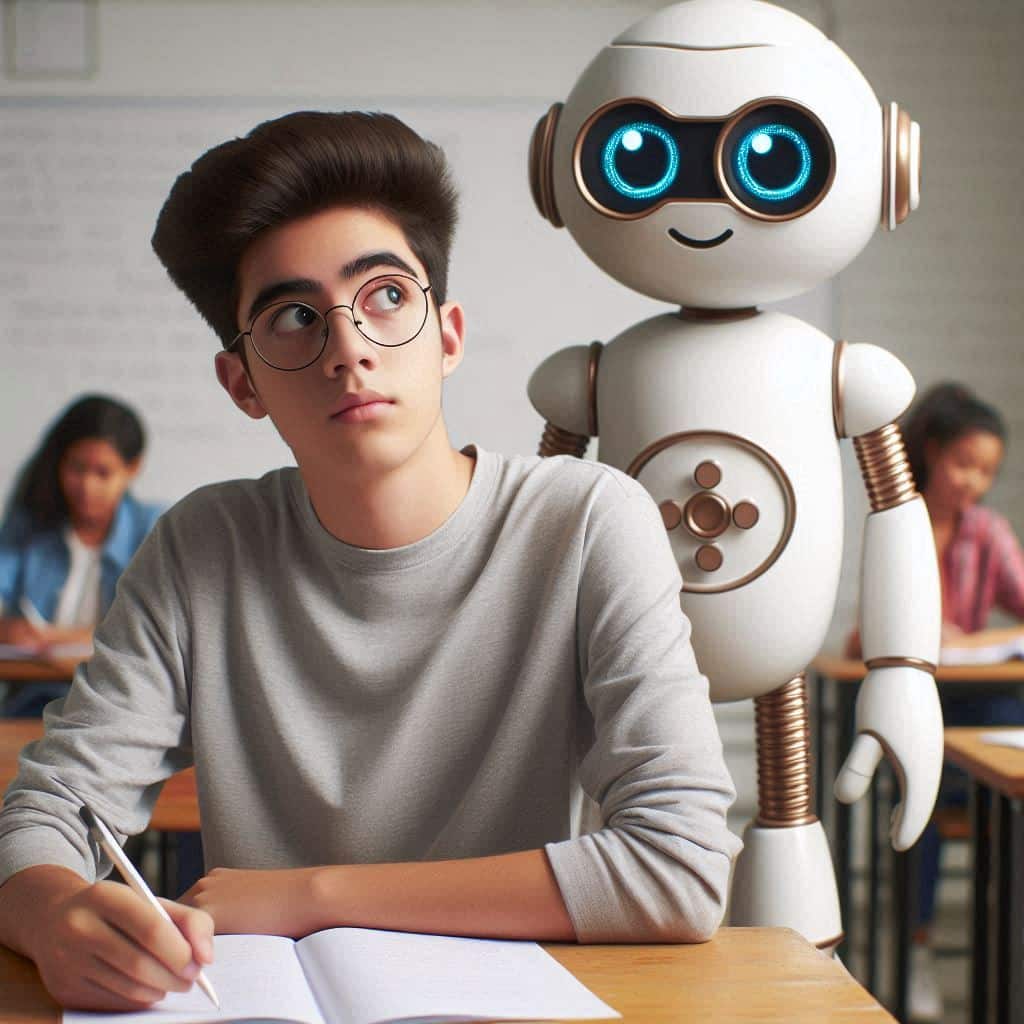
The increasing reliance on AI proctoring services (AIPS) in education presents a complex challenge, particularly when considering the potential for bias against students with disabilities, such as ADHD. While these systems aim to uphold academic integrity in online assessments, their design and implementation may inadvertently create an uneven playing field, disproportionately affecting divergent learners. With learning more increasingly being pushed online, there’s needs to be a compromise between the average learner and those that deviate.
Individuals with ADHD often exhibit behaviors that could be misinterpreted by AI proctoring systems. For instance, difficulties with sustained attention might lead to frequent shifts in gaze or fidgeting, or otherwise act in ways, which could be flagged as suspicious activity by algorithms designed to detect cheating. Similarly, the need for movement or the use of stimming behaviors, common in ADHD, could be wrongly flagged as attempts to access external resources. This can lead to undue stress, anxiety, and even false accusations of academic misconduct, despite the student not engaging in any dishonest behavior.
The lack of transparency in how some AI proctoring systems operate can increase these issues. Students may not understand why their behavior was flagged, leaving them feeling powerless and unjustly targeted. The potential for bias in these systems raises serious concerns about their appropriateness for all students, especially those with disabilities that impact their behavior during assessments.
It is important for educational institutions to carefully consider the potential for bias against ADHD students when implementing AI proctoring services. A more thoughtful and inclusive approach could be needed, one that prioritizes understanding and accommodation over rigid surveillance. This might involve:
- Increased Awareness and Training: Educating AI developers and proctoring service providers about the diverse behavioral manifestations of disabilities like ADHD.
- Adjusting Algorithms: Refining AI algorithms to be more tolerant of behaviors that are common among ADHD individuals and less likely to be indicative of cheating.
- Providing Accommodations: Offering appropriate accommodations for students with disabilities who may be disadvantaged by standard AI proctoring protocols. This could include alternative assessment methods or the ability to use specific tools or strategies during online exams.
- Human Oversight and Review: Ensuring that any flags raised by AI systems are carefully reviewed by human proctors who are trained to understand and consider the potential impact of disabilities on student behavior.
- Open Communication: Establishing clear channels of communication between students, disability services, and the institution to address concerns and provide support related to AI proctoring.
- In-Person Exams: Allow these students to have their exams completed in person with human proctoring
These AIPS may lack real-world understanding and could underrepresent certain groups of students. It is my experience I have had different reporting of student’s behaviors being incorrectly identified as having suspicious behaviors and being penalized. The high stakes on the outcomes of student’s lives from these tests make it at least necessary to explore if this is a problem for certain groups of students. These are powerful tools for identifying and utilizing common patterns. Their strength lies in their ability to process vast amounts of data and generate statistically probable outputs. However, their reliance on averages and probabilities could lead to them overlooking or downplaying exceptions, especially those that are rare, have low statistical probability, or may not be well-represented in their training data.