There is compelling evidence that untreated ADHD can result in negative consequences and impair functional effectiveness. There is a risk of physical injury, decline in self-care and self-sufficiency, impaired social interactions, and reduced success in education and occupation. These are crucial domains of life for all individuals and necessary to maintain survival, well-being, and long-term happiness.
Although not commonly linked to ADHD, driving is a crucial everyday task that relies on several cognitive abilities. Driving demands a continuous level of attention, and individuals must utilize various executive functions, including emotional regulation, rapid information processing, efficient working memory usage to adjust to changing circumstances, and the ability to resist distractions.
Research indicates that individuals with ADHD are more likely to be involved in motor vehicle accidents than their non-ADHD counterparts, with some estimates suggesting up to a 50% higher risk. This could be attributed to the fact that individuals with ADHD frequently encounter challenges with impulse control, attention, and distractibility, which can have an adverse impact on their ability to drive safely.
How does ADHD treatment affect the individual?
A study conducted by Arnold et al. in 2020 focused on the long-term outcomes of individuals with ADHD and the impact of treatment on their academic performance. The study found that treatment of ADHD led to significant improvements in academic achievement and performance on achievement tests.

Shaw et al. conducted a study in 2012 which revealed that treating ADHD can lead to improvements in multiple areas outside of the classroom. The study found that individuals with ADHD experienced benefits such as enhanced driving abilities, decreased obesity, increased self-esteem, improved social functioning, better academic performance, reduced drug addiction, decreased antisocial behavior, decreased service utilization, and improved occupational outcomes. These results indicate that treating ADHD can have positive effects on various aspects of an individual’s life beyond their academic performance.
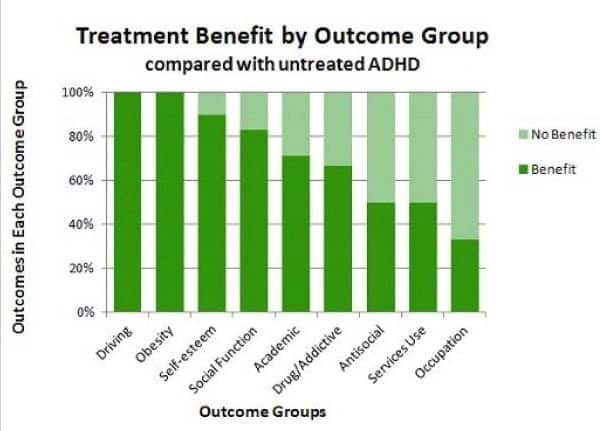
Untreated ADHD increases the likelihood of academic failure, motor vehicle accidents, job loss, impaired social functioning, and mental health issues. In addition, individuals with ADHD may encounter challenges such as low self-esteem, frequent forgetfulness, and difficulties with planning and time management. ADHD is often associated with other mental health conditions like anxiety and depression. By identifying whether ADHD is the underlying cause of these struggles, individuals can make informed decisions about the benefits and risks of seeking treatment for adult ADHD.