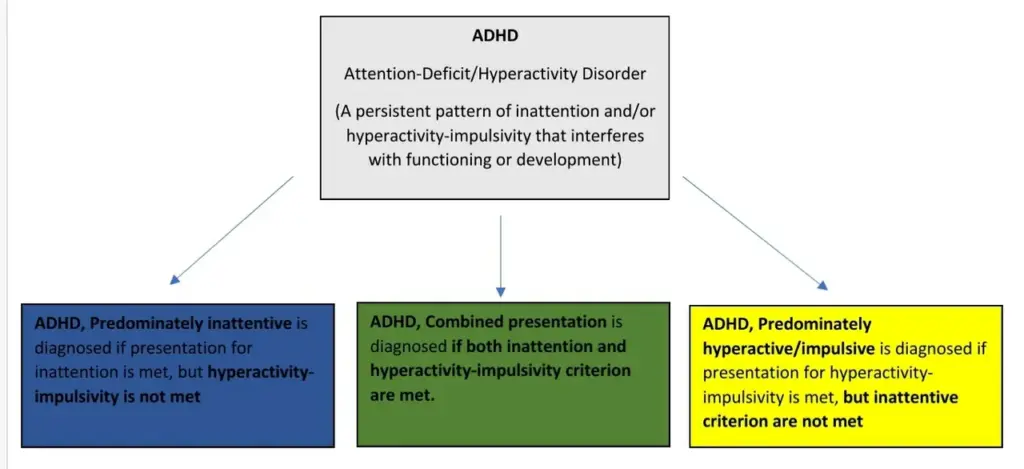
The previous classification system for neurodevelopmental disorders (ADHD) allowed for ADHD to be labeled as attention deficit disorder (ADD), which referred to individuals who struggled with attention but were not hyperactive. However, this term is no longer used, and the current diagnostic criteria only allows for ADHD, predominantly inattentive presentation to be diagnosed. This can create confusion for patients who do not exhibit hyperactive/impulsive symptoms yet are given a diagnosis that includes hyperactivity in its name.
The DSM-V is intended to facilitate communication among clinicians and aid in the development of targeted interventions and medications for patients. However, this diagnostic label does not accurately reflect the unique presentations of ADHD and fails to provide the specificity required for effective treatment.
Furthermore, it is important to note that each presentation of ADHD requires tailored interventions, and the lack of specificity in the diagnostic label can hinder the development of appropriate treatments. Additionally, it’s worth noting that even the current diagnostic label, ADHD, does not include impulsivity in its name, and thus, does not fully reflect the complex range of symptoms that individuals with ADHD may experience.
The classification system in The Diagnostic and Statistical Manual of Mental Disorders, Fifth Edition (DSM-V) has created categorical confusion, which has led to widespread misinformation about ADHD. The latest update implemented changes that oversimplify a complex and nuanced diagnosis. By associating hyperactivity with all presentations of ADHD, the diagnostic criteria may cause adults and those who predominantly exhibit inattentiveness, disorganization, and difficulty staying focused to feel discouraged from seeking treatment since hyperactivity is not present in their lives.
However, it’s important to note that hyperactivity is not reported by most adults with ADHD, as they have learned to suppress these outward physical behaviors such as fidgeting and running around. Instead, they may feel restless, and their symptoms manifest in other ways.
These oversimplifications and generalizations in the DSM-V can lead to misunderstandings about ADHD and may prevent individuals from receiving the appropriate diagnosis and treatment they need to manage their symptoms effectively.
This is why many prominent experts in the field of ADHD such as Dr. Russell A. Barkley and Dr. Thomas E. Brown have moved toward a model recognizing ADHD as related to executive functioning and self-regulation. This framework allows for a better understanding of the individual is impacted and less on an inaccurate label. This further underscores the importance of having a complete ADHD testing evaluation completed by someone that is experienced in both diagnosis and treatment of ADHD.